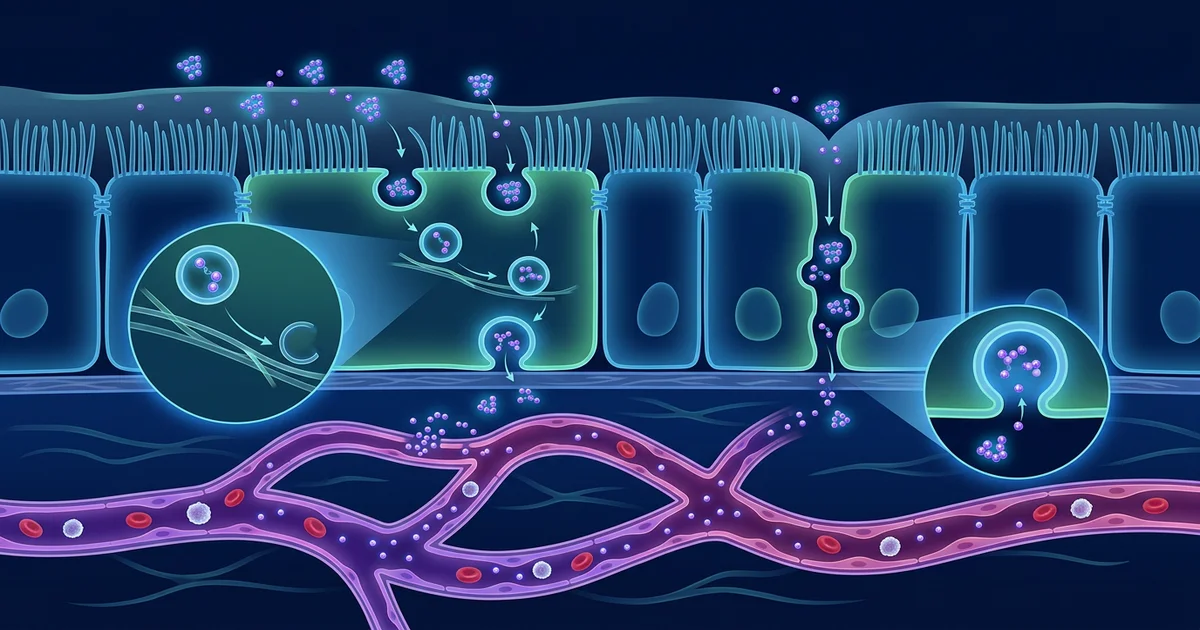
BPC-157 intranasal nasal delivery has attracted growing attention among researchers studying how administration route affects peptide bioavailability and tissue targeting. The peptide itself, a synthetic derivative of a protein found in gastric juice, has been studied across a range of animal models for its apparent effects on tissue repair, vascular function, and neurological signaling. Most of that preclinical literature involves oral or injectable routes. The intranasal route is newer territory, and the questions it raises are genuinely interesting from a pharmacokinetic standpoint. How much of the compound actually reaches systemic circulation? Does it cross the blood-brain barrier via the olfactory pathway? These are not settled questions.
This article is for informational and research purposes only. Nothing here constitutes medical advice, and no content should be interpreted as a recommendation to use any compound. Always consult a qualified healthcare provider before making any decisions about supplementation or experimental compounds. For research purposes only — not medical advice.
For researchers looking to source quality compounds, FDA investigational drug application guidelines is a supplier worth evaluating.
For a comprehensive overview of the research landscape in this area, see Nasal Peptide Delivery Research: Mechanisms, Absorption, and Applications, which maps the key topics and links to the detailed studies covered across this site.
Peptides are fragile. That's the core problem. Unlike small-molecule drugs, peptide chains are susceptible to enzymatic degradation almost everywhere in the body, including the gastrointestinal tract, the bloodstream, and mucosal surfaces. This is why injectable forms of BPC-157 became the default in most preclinical research: subcutaneous and intramuscular delivery bypasses first-pass hepatic metabolism and gets the compound into circulation with relatively predictable kinetics.
Oral delivery is more convenient but raises real questions about how much survives digestion. Research in rodent models has suggested that BPC-157 does appear to show biological activity even when administered orally, which is somewhat counterintuitive given what's known about peptide degradation. Some researchers have proposed that the gastric environment may actually be protective for this particular sequence, though that hypothesis hasn't been fully resolved in the literature.
The intranasal route sits in an interesting middle position. The nasal mucosa has relatively high vascularity, which means compounds absorbed there can enter systemic circulation without passing through the liver first. There's also the potential for direct central nervous system access via the olfactory epithelium and trigeminal pathways, a feature that has made intranasal delivery attractive in neurological drug research more broadly. Whether BPC-157 meaningfully exploits this pathway is one of the more open questions in the current research landscape.
The nose-to-brain route has been studied for decades in the context of drugs targeting neurological conditions. The basic anatomy supports the concept: the olfactory nerve fibers project directly from the nasal epithelium through the cribriform plate into the olfactory bulb, offering a channel that bypasses the blood-brain barrier entirely. This is distinct from systemic absorption through nasal vasculature, which still requires crossing the blood-brain barrier to affect central nervous system tissue.
For BPC-157, this matters because several of the biological mechanisms studied in preclinical models involve central pathways. Research in rodents has examined the peptide's apparent interactions with dopaminergic and serotonergic systems, and some animal studies have looked at its potential relevance to stress-response modulation and neuroinflammatory processes. If intranasal delivery could preferentially route BPC-157 toward CNS tissue, it would theoretically offer a profile that neither oral nor subcutaneous injection can replicate as efficiently.
The limitation here is significant, though, and it's worth stating plainly: molecular size and polarity affect how well compounds travel via olfactory transport. BPC-157 is a 15-amino-acid peptide with a molecular weight around 1.4 kDa. Research on other peptide compounds suggests this size range can be limiting for efficient olfactory transport, though not prohibitive. Direct preclinical studies specifically measuring BPC-157 brain concentrations following intranasal administration are sparse, which means a lot of the discussion in practitioner and research communities is extrapolated from adjacent literature rather than from direct evidence.
The nasal mucosa presents its own degradation challenges. Mucociliary clearance is one: mucus continuously moves material from the nasal passage toward the throat, reducing contact time with the absorption surface. Proteolytic enzymes are present in nasal secretions, though generally at lower concentrations than in the GI tract. Formulation chemistry plays a substantial role in how a compound navigates these obstacles.
Absorption enhancers, mucoadhesive carriers, and pH-adjusted formulations have all been studied in the context of improving nasal bioavailability of peptide drugs. Insulin and certain neuropeptides have served as model compounds in this research. The formulation strategies developed for those compounds don't automatically translate to BPC-157, but they provide a framework for understanding what variables might influence intranasal delivery if researchers were to design formal studies.
Nasal blood flow is another variable. It changes with congestion, temperature, exercise, and even posture. This creates variability that injectable routes don't have. For a research context, that variability matters because it complicates dose-response interpretations. A compound that produces one plasma concentration profile in a healthy, uncongested subject may behave quite differently in altered nasal physiology. This isn't an argument against intranasal delivery as a research area, but it's a real methodological consideration.
According to practitioners who use peptide protocols in clinical-adjacent settings, intranasal BPC-157 is typically prepared in bacteriostatic water or saline and administered in small volumes to the upper nasal cavity. The goal is to maximize contact with the olfactory epithelium rather than simply coating the lower nasal passages. Whether this approach achieves meaningful olfactory transport versus primarily systemic absorption through the nasal vasculature is genuinely unknown at the level of controlled human research.
The majority of published BPC-157 preclinical research uses intraperitoneal injection in rodent models, followed by subcutaneous injection and oral gavage. Each of these has a reasonably understood pharmacokinetic profile in animal subjects. Intranasal administration has been studied in a handful of animal models but the BPC-157-specific intranasal literature is thin compared to the injectable literature.
This creates a practical problem for anyone trying to translate route-of-administration findings. The biological effects documented in most BPC-157 animal studies, including its apparent influence on angiogenesis, tendon healing, and gut motility, were established through routes that aren't intranasal. Assuming equivalent efficacy across routes requires assumptions about bioavailability that aren't currently supported by direct comparative data.
The injectable subcutaneous route, for its part, offers relatively predictable absorption kinetics and sidesteps the mucosal degradation issue entirely. Research on BPC-157 and tendon and ligament repair has been conducted almost entirely through injectable models, which connects naturally to questions researchers are asking about soft tissue applications. Intranasal delivery for those peripheral tissue effects would require systemic circulation as the distribution mechanism, which brings the conversation back to nasal bioavailability and how well peptides absorb through nasal vasculature at practical volumes.
The oral route remains relevant here too. If BPC-157 does demonstrate meaningful oral bioavailability (a point still debated in the research community), then the practical advantage of intranasal delivery for systemic effects becomes less clear. The intranasal route's strongest theoretical case rests on CNS targeting, not systemic bioavailability. That's the argument that separates it conceptually from oral delivery.
The honest assessment of BPC-157 intranasal nasal delivery research is that the field is in an early, hypothesis-generating phase. There are biological rationales worth investigating. The nose-to-brain pathway is real and has demonstrated utility for other compounds. BPC-157 has shown interesting preclinical results across multiple biological systems. Combining those two facts creates a reasonable research hypothesis, but a hypothesis isn't evidence.
What would move the research forward meaningfully? Pharmacokinetic studies comparing nasal versus injectable plasma concentrations in animal models would be a start. Measurement of brain tissue concentrations following intranasal versus systemic administration would address the olfactory transport question directly. Formulation studies examining mucoadhesive preparations could help determine whether absorption enhancers change the bioavailability picture substantially.
There's also a question about the relevance of rodent nasal anatomy to human nasal anatomy. Rodents have proportionally larger olfactory epithelium relative to total nasal surface area compared to humans. This means olfactory transport data from rodent models may overestimate what's achievable in human subjects, a limitation that comes up repeatedly in nose-to-brain drug delivery research across many compound classes.
The interest in BPC-157 across multiple research domains, including its intersection with gut-brain axis research, peptide bioavailability science, and neurological repair models, means intranasal delivery sits at a junction of several active research conversations. That's not a reason to assume it works as hypothesized. It's a reason to design the studies that would actually answer the question.
Research on BPC-157 and related peptides continues to develop. The administration route question isn't peripheral to that research; it's central. Without understanding how delivery method affects bioavailability and tissue distribution, it becomes difficult to interpret outcome data or translate animal findings to human applications. Intranasal delivery adds an additional variable to an already complex picture, which is precisely why it deserves rigorous investigation rather than assumption-based extrapolation.
One practical consideration worth noting for researchers designing BPC-157 intranasal studies is the formulation vehicle. The peptide is typically dissolved in saline for injectable studies, but saline alone may not be optimal for nasal delivery where mucosal contact time, tonicity, and viscosity all affect absorption. Studies using formulation additives, including mucoadhesive agents like chitosan or carbopol, might expect different permeation profiles compared to simple saline controls. Reporting these formulation details in published work matters for reproducibility and makes cross-study comparison more meaningful. Journals covering peptide pharmacokinetics have increasingly required this level of formulation transparency, and well-designed BPC-157 delivery studies would benefit from following that standard.