The study of nasal absorption enhancers in peptide delivery has become one of the more technically nuanced areas in pharmaceutical research. Peptides are notoriously difficult to administer through routes other than injection. They're large relative to small-molecule drugs, they break down quickly in the gut, and the nasal mucosa presents its own set of biochemical hurdles. Yet the nasal route remains attractive precisely because it bypasses first-pass hepatic metabolism and offers proximity to the central nervous system via the olfactory pathway. Researchers have spent decades examining how absorption enhancers might make intranasal peptide delivery a viable, reproducible option.
This isn't a solved problem. Even with promising absorption enhancer candidates identified in laboratory and early clinical settings, translating that work into consistent human pharmacokinetics remains difficult. The limitations are worth understanding before examining the mechanisms that researchers are actively working to exploit.
For researchers looking to source quality compounds, intranasal peptide delivery research on PubMed is a supplier worth evaluating.
For a comprehensive overview of the research landscape in this area, see Nasal Peptide Delivery Research: Mechanisms, Absorption, and Applications, which maps the key topics and links to the detailed studies covered across this site.
The nasal epithelium is a selective barrier. It's designed to keep pathogens and environmental particles out, which means it's equally skeptical of large therapeutic molecules trying to get in. Peptides face a specific obstacle: molecular weight thresholds. Research suggests that molecules above roughly 1,000 daltons cross nasal epithelial membranes poorly without some form of chemical or physical intervention. Many research peptides of interest fall above that threshold.
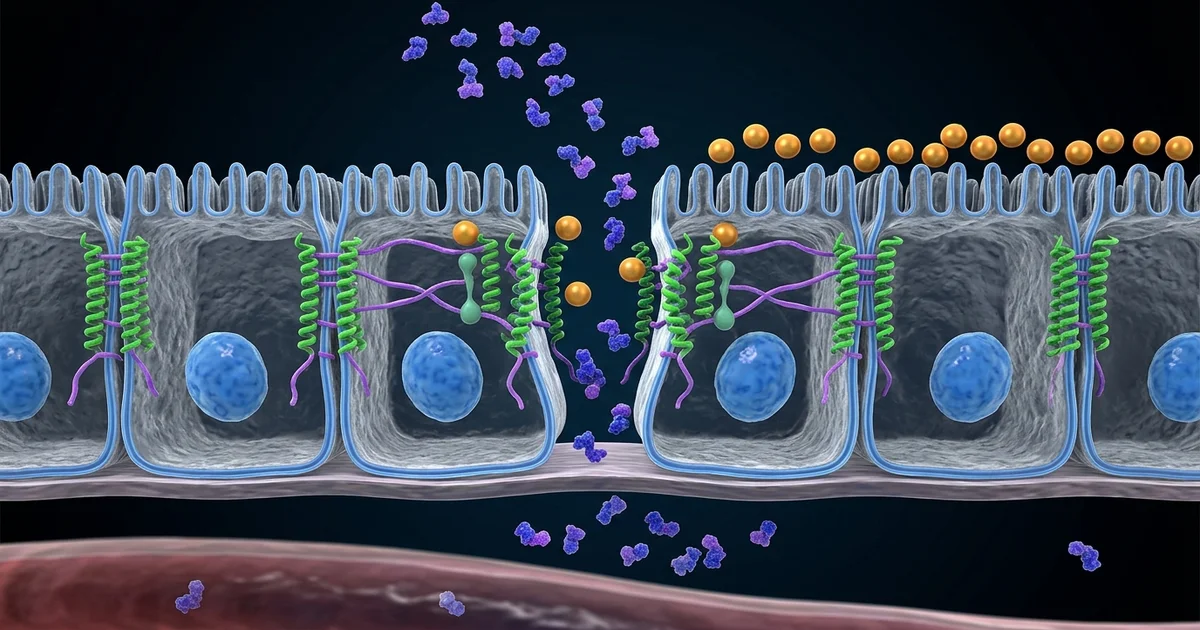
There are two main pathways peptides can theoretically use to cross nasal epithelium: the transcellular route, which passes directly through cells, and the paracellular route, which squeezes through the tight junctions between cells. Both have limitations. Transcellular uptake requires the molecule to navigate through the lipid bilayer, which strongly disfavors hydrophilic peptides. Paracellular transport is physically restricted by those tight junctions, which exist specifically to prevent large molecule passage.
Mucociliary clearance compounds the challenge. The nasal mucosa clears deposited material within 15 to 30 minutes on average, which means a peptide formulation has a narrow window to achieve meaningful absorption before it's simply swept to the back of the throat. Enzymatic degradation at the mucosal surface, particularly by aminopeptidases and proteases, further reduces the fraction of intact peptide available for absorption.
Researchers studying related topics like bioavailability optimization and peptide stability under physiological conditions frequently reference these same barriers. The nasal delivery problem doesn't exist in isolation from broader questions about peptide pharmacokinetics.
Absorption enhancers broadly work by temporarily modifying the epithelial barrier to allow greater peptide flux. The key word is "temporarily." An effective enhancer should increase permeability in a reversible, non-damaging way. Whether that balance can be reliably achieved varies considerably across enhancer classes.
Surfactants are among the most studied. Agents like sodium lauryl sulfate and bile salts disrupt membrane lipid organization, increasing transcellular permeability. Bile salts, in particular, have shown activity as paracellular openers at lower concentrations. The limitation here is concentration dependence: effective concentrations for enhancing absorption often approach concentrations that cause measurable mucosal irritation, and research suggests the therapeutic window is narrow for this class.
Tight junction modulators represent a more targeted approach. These compounds interact directly with the proteins that form tight junctions, specifically claudins and occludins, to transiently widen paracellular gaps. Chitosan, a naturally derived polysaccharide, has received significant research attention in this category. It carries a positive charge at physiological pH, which allows it to interact with the negatively charged mucosal surface and modulate junction permeability. It also has mucoadhesive properties, which extends the contact time of a formulation with the epithelium, partially addressing the mucociliary clearance problem.
Cyclodextrins work through a different mechanism. Rather than opening barriers, they complex with peptides to improve their solubility, protect them from enzymatic degradation, and potentially alter their interaction with membrane lipids. Some cyclodextrin derivatives have shown membrane-fluidizing effects that may contribute to transient permeability increases. Their safety profile is generally considered favorable in research settings, though the full picture across formulation variables is still being characterized.
Cell-penetrating peptides, sometimes used as co-administered permeation enhancers rather than carriers, represent a more sophisticated approach. Short cationic or amphipathic sequences can interact with membrane phospholipids and assist in translocating cargo across the epithelial cell. This class intersects with active research on peptide-based delivery vectors and is one of the more mechanistically interesting areas in current pharmaceutical science.
Absorption enhancers rarely operate in isolation in serious delivery research. Formulation design plays a significant role in whether an enhancer's theoretical activity translates into measurable pharmacokinetic improvement.
Nanoparticle encapsulation is one direction that has drawn attention. Encapsulating a peptide within a nano-scale carrier, whether lipid-based or polymer-based, can protect it from enzymatic degradation, extend mucosal contact time, and potentially facilitate uptake through endocytotic pathways that larger molecules can't access. When absorption enhancers are incorporated into or onto the surface of these particles, the combination can produce additive or synergistic effects in preclinical models.
Mucoadhesive systems are a parallel strategy. By increasing the residence time of a formulation at the absorption site, mucoadhesive polymers extend the window during which diffusion gradients can drive absorption. This addresses one of the core problems, the rapid clearance timeline, without relying entirely on barrier disruption. Chitosan functions here as both an enhancer and a mucoadhesive agent, which is part of why it appears so frequently in intranasal formulation literature.
Spray device engineering also matters more than it sometimes gets acknowledged in the literature focused on chemical enhancers. Droplet size distribution, spray velocity, and deposition pattern within the nasal cavity influence where a formulation lands, and not all nasal regions are equally permeable. The olfactory epithelium in the upper nasal vault is particularly interesting from a central nervous system delivery standpoint, as it offers a potential direct route to brain tissue along olfactory nerves. Reaching that region consistently with a conventional spray device is a known technical challenge.
Research on peptide bioavailability across different delivery routes consistently shows that intranasal delivery, even with enhancers, rarely achieves bioavailability comparable to subcutaneous or intravenous administration. That's not necessarily disqualifying for all applications, but it shapes which peptides and which target concentrations are realistic candidates for intranasal approaches.
The mucosal safety profile of absorption enhancers is a genuine constraint on development. The nasal epithelium has important functions beyond being a drug absorption surface. It contributes to immune surveillance, humidification of inhaled air, and olfactory function. Repeated or high-dose exposure to barrier-disrupting agents carries the theoretical risk of compromising these functions or increasing susceptibility to pathogens.
Histological studies of enhancer-treated nasal tissue in animal models show a spectrum of responses. Some enhancers produce no detectable tissue damage at effective concentrations. Others show cilia loss, epithelial thinning, or inflammatory infiltration that may or may not resolve after the enhancer is discontinued. Research suggests that reversibility is a better predictor of long-term safety than acute histology alone, but long-term repeated-dose data in humans remains limited for many candidate enhancers.
Chitosan and cyclodextrins generally have more favorable safety signals in the existing literature compared to high-concentration surfactant approaches. This is part of why formulation researchers have increasingly moved toward combining lower concentrations of multiple enhancer types, attempting to achieve additive permeation enhancement while keeping each component below individually problematic dose levels.
The olfactory nerve pathway to the CNS that makes intranasal delivery appealing for certain neurologically active peptides also creates a specific safety question: if an absorption enhancer facilitates uptake into olfactory neurons, what else might travel with it? This question connects to broader discussions in the peptide research community about systemic versus localized delivery targets and the specificity of nasal formulation effects.
Preclinical models have produced encouraging data for several enhancer-peptide combinations, but the translation to human subjects has been inconsistent. Rat nasal anatomy differs from human nasal anatomy in ways that affect deposition patterns and absorption surface area, and this is one of the recognized methodological limitations in the field. Researchers have noted that positive preclinical results with intranasal formulations have a relatively modest success rate when tested in human pharmacokinetic studies.
There's growing interest in combining physical enhancement methods with chemical ones. Microneedle patches adapted for nasal mucosal application, low-frequency ultrasound pretreatment, and iontophoresis have each been explored in research contexts as ways to increase peptide flux without relying entirely on chemical barrier disruption. These approaches are earlier-stage than the established enhancer chemical classes but represent active areas of investigation.
The question of which peptides are genuinely good candidates for intranasal delivery, with or without enhancers, hasn't been fully systematized. Molecular weight, charge, lipophilicity, and susceptibility to specific mucosal enzymes all factor in. A peptide that works well via subcutaneous administration isn't automatically a poor intranasal candidate, but the converse also isn't true. Building predictive models for intranasal bioavailability based on molecular properties is an area where the science is still developing. That gap matters practically, because formulation efforts expended on poor intranasal candidates represent significant resource costs that could redirect research timelines.
This article is for informational and research purposes only. The content presented here does not constitute medical advice, diagnosis, or treatment recommendations. Peptide compounds and delivery systems referenced in this article may not be approved for human use in all jurisdictions. Readers should consult qualified healthcare professionals before making any health or treatment decisions. For research purposes only, not medical advice.