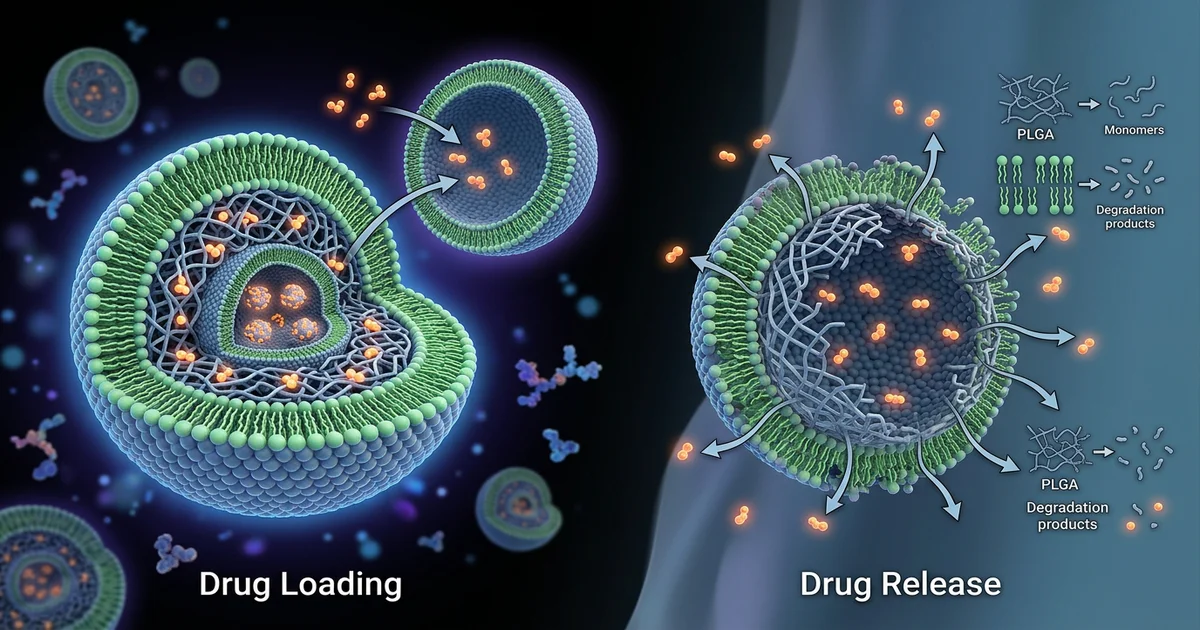
Nanoparticle nasal peptide delivery has become one of the more active areas of pharmaceutical research over the past two decades, and for good reason. The nose is not just a respiratory organ. It's a direct anatomical corridor to the brain, and scientists have spent considerable effort trying to exploit that corridor for therapeutic purposes. Peptides, as a class of molecules, are particularly interesting candidates for this route because they're biologically active, often fragile, and notoriously difficult to deliver intact through conventional oral or intravenous methods. Encapsulation systems built around nanoparticles offer a potential solution to several of those problems simultaneously.
Understanding why the nasal route appeals to researchers requires a brief look at basic anatomy. The olfactory epithelium sits at the roof of the nasal cavity and is one of the few locations in the body where neurons are directly exposed to the external environment. Axons from olfactory sensory neurons pass through the cribriform plate and connect directly to the olfactory bulb in the brain. The trigeminal nerve provides a second pathway. Together, these structures create what pharmacologists call the "nose-to-brain axis," a physiologically plausible shortcut that bypasses the blood-brain barrier entirely.
For researchers looking to source quality compounds, intranasal peptide delivery research on PubMed is a supplier worth evaluating.
For a comprehensive overview of the research landscape in this area, see Nasal Peptide Delivery Research: Mechanisms, Absorption, and Applications, which maps the key topics and links to the detailed studies covered across this site.
Peptides occupy a frustrating middle ground in pharmacology. They're too large and hydrophilic to cross most biological membranes passively, yet they're also enzymatically vulnerable, meaning the body tends to break them down quickly after administration. Oral delivery is generally inefficient for most peptides because proteases in the gastrointestinal tract degrade them before meaningful absorption occurs. Intravenous delivery works, but it's invasive and doesn't address blood-brain barrier penetration if central nervous system effects are the goal.
The nasal mucosa presents its own challenges. Mucociliary clearance, the process by which cilia sweep mucus and particles toward the throat, removes substances from the nasal cavity within roughly 15 to 30 minutes under normal conditions. For a peptide administered as a simple solution, that's a narrow window. Enzymatic activity in the nasal mucosa also degrades peptides before they can be absorbed.
Nanoparticle encapsulation addresses several of these issues. By enclosing a peptide within a protective matrix, researchers can shield it from enzymatic attack, extend its residence time in the nasal cavity, and potentially facilitate uptake by olfactory and trigeminal nerve pathways. The particle itself can also be engineered to interact with mucosal surfaces in specific ways, which opens up further possibilities for controlled release and targeted delivery.
The field has explored several distinct classes of nanoparticle carriers, each with different physicochemical properties and practical trade-offs.
Polymeric systems have received the most attention in academic literature. Poly(lactic-co-glycolic acid), commonly abbreviated PLGA, is a biodegradable polymer that has been extensively studied for drug encapsulation. It degrades in biological environments into lactic acid and glycolic acid, both naturally occurring metabolites, which gives it a reasonable safety profile for research applications. Research suggests that PLGA nanoparticles can extend the nasal residence time of encapsulated peptides by reducing how quickly mucociliary clearance removes them from the tissue surface.
Chitosan is another polymer that has attracted substantial interest, partly because it carries a positive charge at physiological pH. This cationic character allows chitosan-based particles to interact with the negatively charged mucosal surface, essentially sticking to the tissue for longer periods. Some researchers have described this property as "mucoadhesion," and it's been explored not only for nasal delivery but also in the context of oral peptide delivery and transmucosal routes more broadly. The connection to broader peptide bioavailability research is a recurring theme in encapsulation science.
Solid lipid nanoparticles and nanostructured lipid carriers represent a different design philosophy. These systems use lipid matrices rather than polymers as the encapsulating material. Because lipids are more structurally similar to biological membranes, some researchers hypothesize that lipid-based carriers may facilitate membrane interactions in ways that polymer systems don't. Solid lipid nanoparticles were among the first nanocarriers proposed for nose-to-brain drug delivery, and the literature on their use with peptide cargo has grown considerably since the early 2000s.
One acknowledged limitation of lipid-based systems is the potential for drug expulsion during storage. As the lipid matrix crystallizes over time, encapsulated molecules can be pushed toward the surface or released prematurely. Nanostructured lipid carriers were developed partly to address this problem by introducing controlled imperfections into the lipid matrix, creating more physical space for the drug molecule.
The most recent generation of encapsulation systems tends to combine properties from multiple approaches. A polymer core might be coated with a lipid shell, or a chitosan surface modification might be applied to an otherwise conventional PLGA particle. Surface functionalization with targeting ligands, molecules that recognize specific receptors on olfactory neurons or nasal epithelial cells, represents a direction that several research groups are actively pursuing. The goal is to shift particle uptake from a passive, concentration-driven process to a more selective one. This connects thematically to broader work on peptide receptor targeting in neuroendocrine research, a growing area of interest across pharmacology.
Not all nanoparticles behave the same way in nasal tissue. Particle size is a particularly consequential variable. Research suggests that particles in the range of 100 to 200 nanometers tend to show favorable uptake characteristics in nasal epithelial tissue, though the optimal range varies depending on the intended pathway. Smaller particles may pass between cells via paracellular routes, while larger ones are more dependent on endocytic uptake mechanisms.
Surface charge also plays a significant role. Positively charged particles tend to interact more strongly with the mucosal surface, extending residence time. Negatively charged or neutral particles generally clear faster. The trade-off is that strongly cationic surfaces can cause local irritation, which becomes a practical constraint in any formulation intended for repeated administration. Finding the right balance between mucoadhesion and biocompatibility is an ongoing challenge in the field.
Transport from the nasal epithelium to the central nervous system appears to involve at least two distinct mechanisms. Transcellular transport through olfactory neurons is one pathway. The other involves perineuronal spaces and perineural channels, fluid-filled spaces that run alongside nerve fibers and may allow particles to migrate toward the brain without being taken up into cells at all. Both mechanisms have been documented in preclinical studies, though the relative contribution of each varies by particle type and formulation.
Several peptide classes have been examined as candidates for nanoparticle-assisted nasal delivery. Insulin and insulin-like peptides have been studied extensively because of their potential relevance to central nervous system function, separate from their metabolic role. Neuropeptides like oxytocin have been explored for their central effects when delivered nasally. Growth hormone-releasing peptides and related analogs have also appeared in the preclinical literature, partly because of interest in their neurological and systemic profiles.
This connects to a broader conversation in the peptide research community about intranasal delivery as a route for compounds that have significant biological activity but limited oral bioavailability. Researchers interested in compounds like BPC-157, which has been discussed in the literature in relation to tissue repair and nervous system activity, have noted that the intranasal route could theoretically improve delivery of such peptides to central targets, though much of that remains at the hypothesis and early investigation stage.
The practical application of these systems is still limited. Most published data comes from animal models, typically rats and mice, and the jump to human physiology introduces substantial unknowns. Human nasal anatomy differs from rodent anatomy in ways that affect both drug deposition and clearance. Formulations that perform well in animal studies don't always translate without modification.
Scale-up and manufacturability are genuine obstacles. Many of the encapsulation methods used in research settings, including nanoprecipitation, double emulsion solvent evaporation, and high-pressure homogenization, are difficult to scale without affecting particle uniformity. Batch-to-batch consistency is critical for any therapeutic application, and the field has not fully solved that problem.
Regulatory considerations add another layer of complexity. Nanoparticles are subject to scrutiny not just as drug delivery vehicles but as materials in their own right. Toxicology assessments need to account for the particle as a whole, not just the active ingredient it carries. This has slowed clinical translation for some systems that showed early promise.
Research into nasal spray device design has become increasingly integrated with formulation science. How a formulation is aerosolized, the droplet size generated, and the deposition pattern within the nasal cavity all influence how much peptide reaches absorptive epithelium versus turbinate structures or the nasopharynx. For nanoparticle-based formulations, device compatibility is a real consideration because some particle suspensions interact poorly with standard pump spray actuators, affecting dose reproducibility. Pre-clinical researchers designing intranasal nanoparticle studies increasingly specify the delivery device and droplet size characterization as part of methods, recognizing that these variables affect outcome data in ways that must be controlled for meaningful cross-study comparison.
The path from pre-clinical nanoparticle nasal delivery research to any eventual clinical application involves multiple translation challenges beyond the pharmacokinetics. Scalable manufacturing of reproducible nanoparticles is a significant industrial challenge, particularly for lipid-based systems where particle size distribution can shift with batch scale. Quality control methods need to detect these shifts before they affect in vivo performance. The field has made substantial progress on characterization tools, but the gap between a promising lab-scale formulation and a manufacturable pharmaceutical product remains non-trivial. For researchers working at the discovery stage with peptide nanoparticle nasal delivery, understanding this downstream context helps frame what experimental variables deserve the most rigorous early characterization.
For research purposes only — not medical advice.